
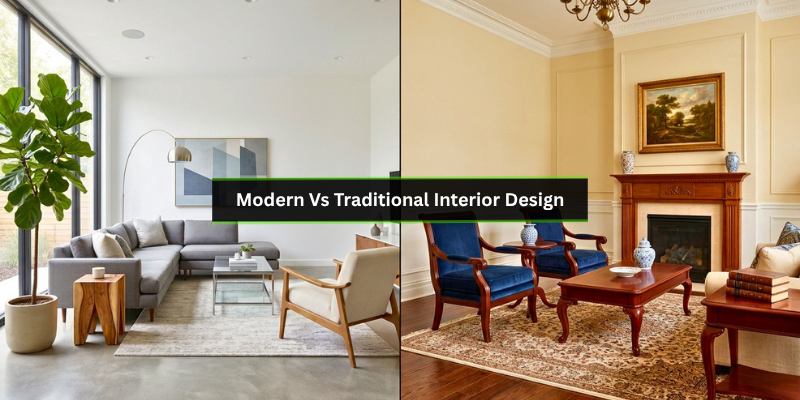
Are you struggling to decide between modern and traditional interior design for your space? Your home reflects who you are, and choosing the right style can make a huge difference in how you feel every day.
Imagine walking into a room that instantly feels just right—whether it’s sleek and simple or warm and classic. You’ll discover the key differences between modern and traditional design, helping you make a choice that fits your taste and lifestyle perfectly.
Keep reading, and find out which style will transform your home into the place you’ve always dreamed of.
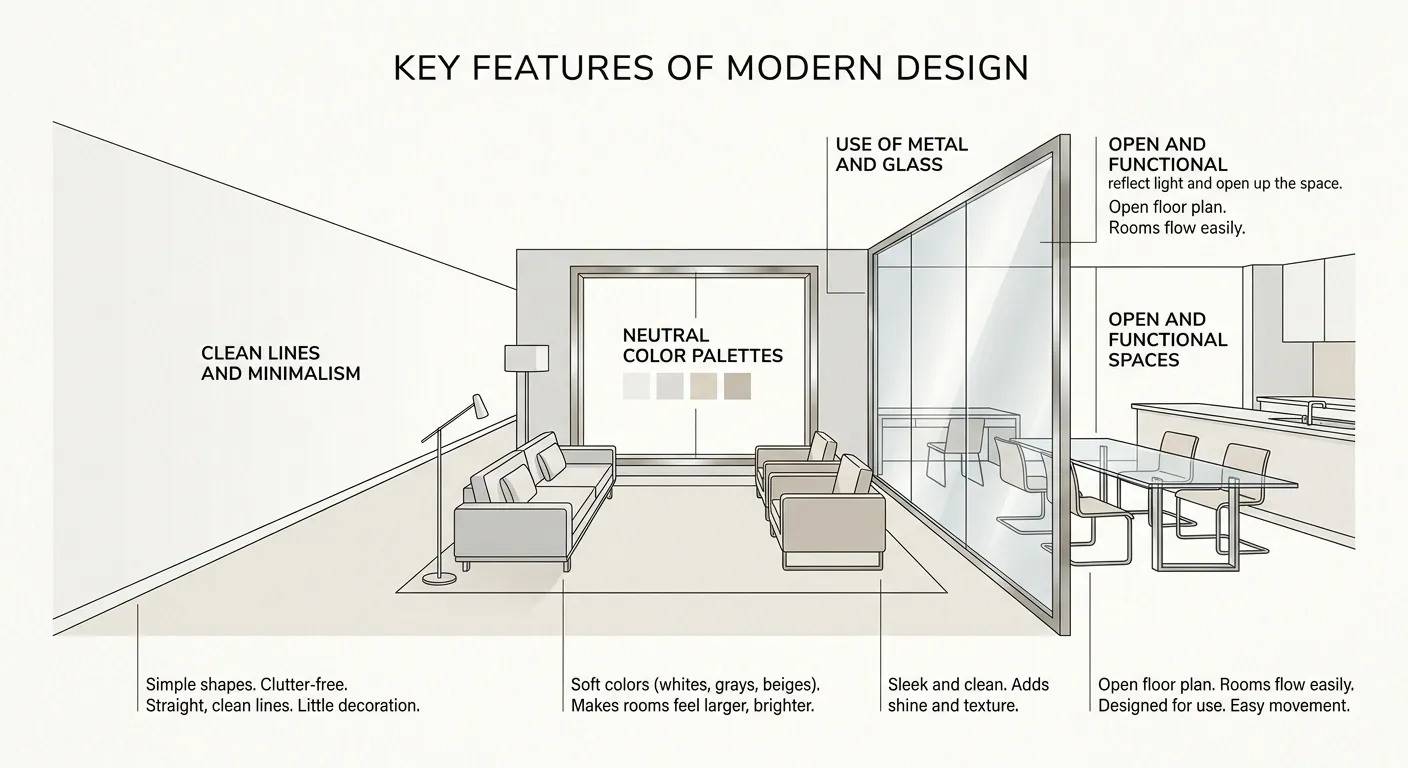
Key Features Of Modern Design
Modern interior design focuses on simplicity and function. It removes clutter to create calm and open spaces.
This style uses clean shapes, neutral colors, and natural materials. It aims for a fresh and airy feeling.
Clean Lines And Minimalism
Modern design uses straight, clean lines with little decoration. This gives a neat and simple look.
Minimalism means using only what is needed. It removes extra items to keep the space clear and organized.
Neutral Color Palettes
Colors in modern design are often soft and neutral. Whites, grays, and beiges create a calm atmosphere.
Neutral colors make rooms feel larger and brighter. They also help furniture and decor stand out.
Use Of Metal And Glass
Modern design uses metal and glass to add shine and texture. These materials look sleek and clean.
Metal frames, glass tables, and shiny fixtures create a modern feel. They reflect light and open up the space.
Open And Functional Spaces
Modern design favors open floor plans. This allows rooms to flow into each other easily.
Spaces are designed to be useful and easy to move around in. Furniture is arranged for comfort and function.
Characteristics Of Traditional Design
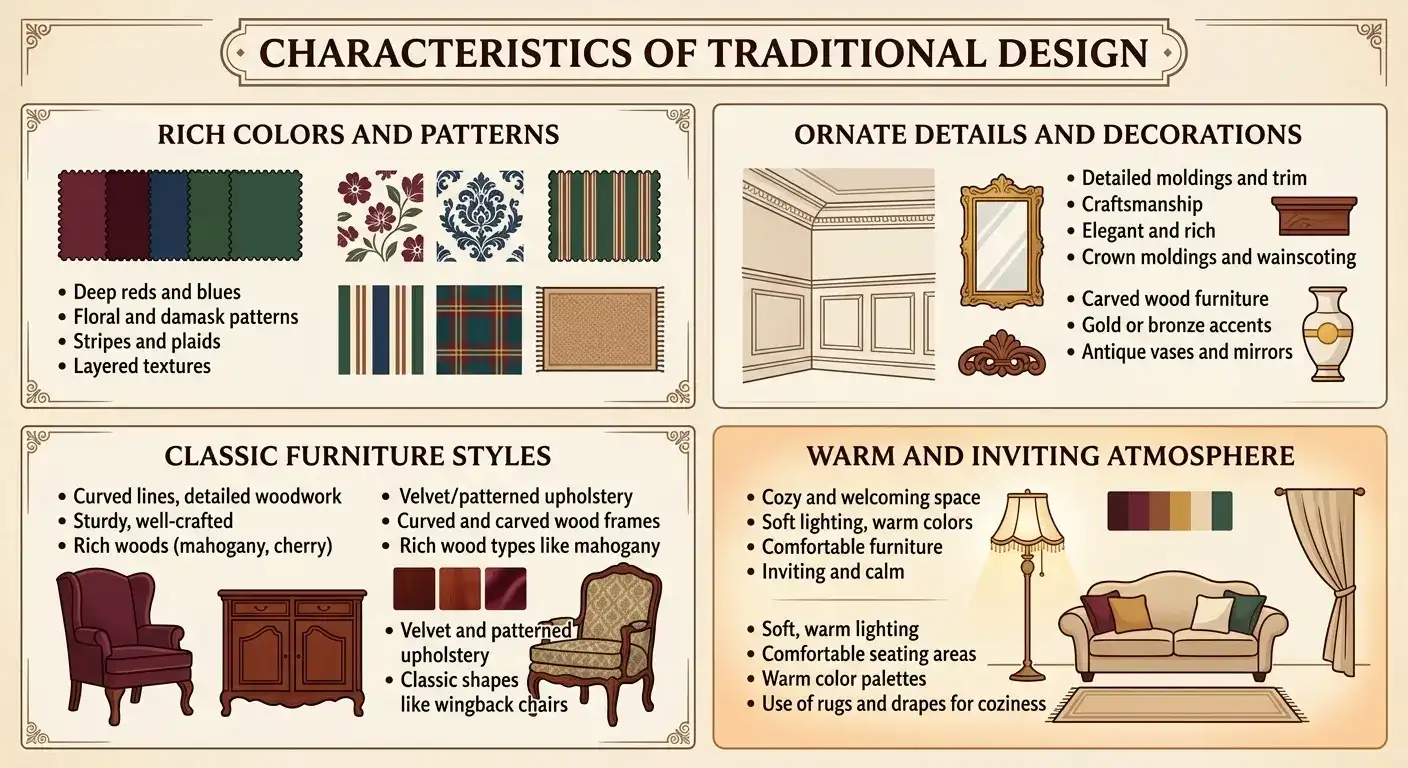
Traditional interior design shows a classic and timeless style. It often uses rich colors and detailed decorations.
This style creates a warm and welcoming feeling in any room. It focuses on comfort and elegance at the same time.
Rich Colors And Patterns
Traditional design uses deep, rich colors like burgundy, navy, and forest green. These colors add warmth and depth.
Patterns like florals, damasks, and stripes are common. They bring texture and interest to walls, fabrics, and rugs.
- Deep reds and blues
- Floral and damask patterns
- Stripes and plaids
- Layered textures
Ornate Details And Decorations
Traditional design features detailed moldings and trim on walls and ceilings. These add a sense of craftsmanship.
Decorative elements like carved wood, gilding, and antique accessories make rooms feel elegant and rich.
- Crown moldings and wainscoting
- Carved wood furniture
- Gold or bronze accents
- Antique vases and mirrors
Classic Furniture Styles
Furniture in traditional design often has curved lines and detailed woodwork. Pieces look sturdy and well-crafted.
Materials include rich woods like mahogany and cherry. Upholstery often uses velvet or patterned fabrics.
- Curved and carved wood frames
- Rich wood types like mahogany
- Velvet and patterned upholstery
- Classic shapes like wingback chairs
Warm And Inviting Atmosphere
Traditional design creates a cozy and welcoming space. It feels comfortable for family and guests.
Soft lighting, warm colors, and comfortable furniture help make the room inviting and calm.
- Soft, warm lighting
- Comfortable seating areas
- Warm color palettes
- Use of rugs and drapes for coziness
Materials And Textures Comparison
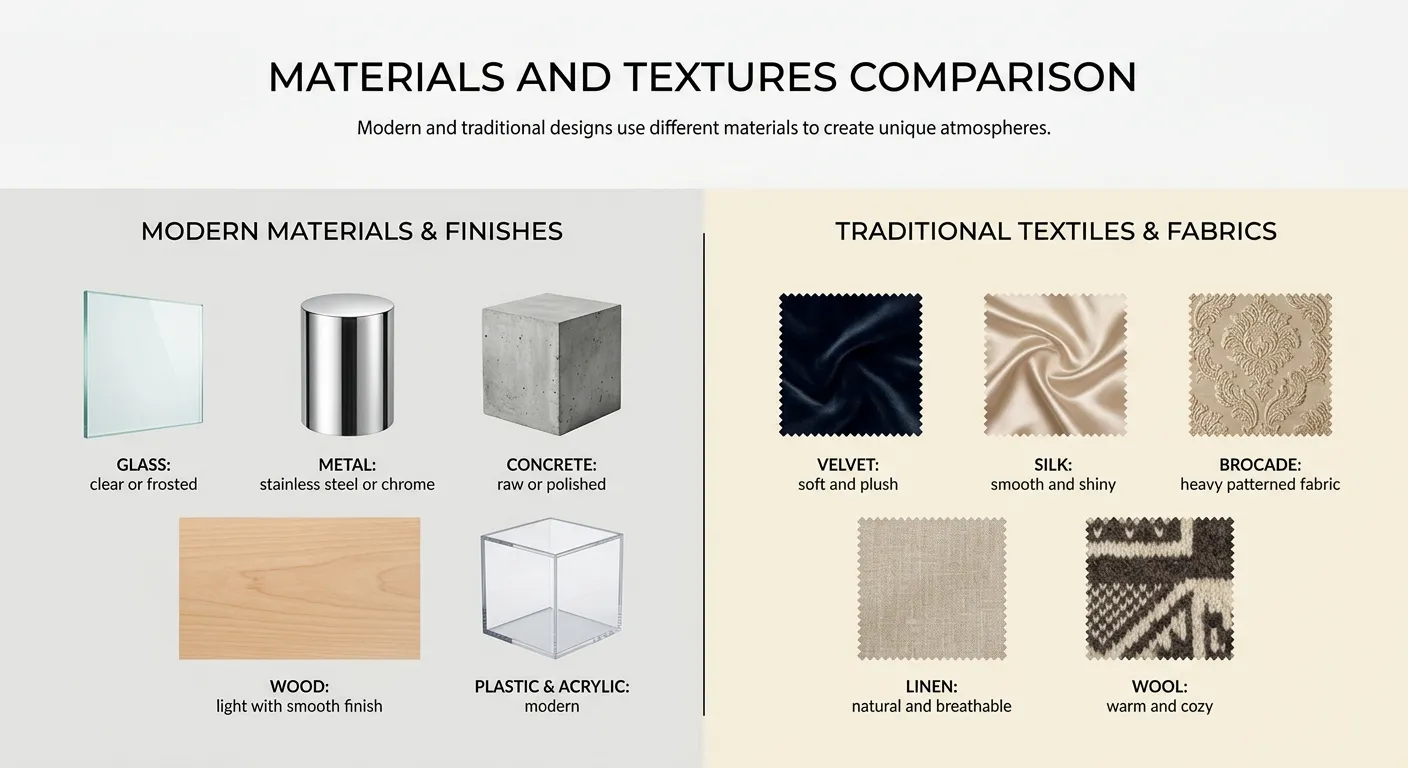
Materials and textures shape the look and feel of any space. They show the style and mood of the room.
Modern and traditional designs use different materials to create unique atmospheres. Let’s explore the key differences.
Modern Materials And Finishes
Modern design uses smooth and sleek materials. These surfaces often have clean lines and a polished look.
Common finishes include glass, metal, and concrete. These give a space a fresh and simple feel.
- Glass: clear or frosted, adds light and openness
- Metal: stainless steel or chrome, offers shine and strength
- Concrete: raw or polished, brings an industrial vibe
- Wood: light-colored with smooth finishes
- Plastic and acrylic: modern and versatile
Traditional Textiles And Fabrics
Traditional design uses rich and textured fabrics. These textiles add warmth and comfort to a room.
Common fabrics include velvet, silk, and brocade. These materials often have detailed patterns and deep colors.
- Velvet: soft and plush, adds luxury
- Silk: smooth and shiny, adds elegance
- Brocade: heavy fabric with raised patterns
- Linen: natural and breathable
- Wool: warm and cozy
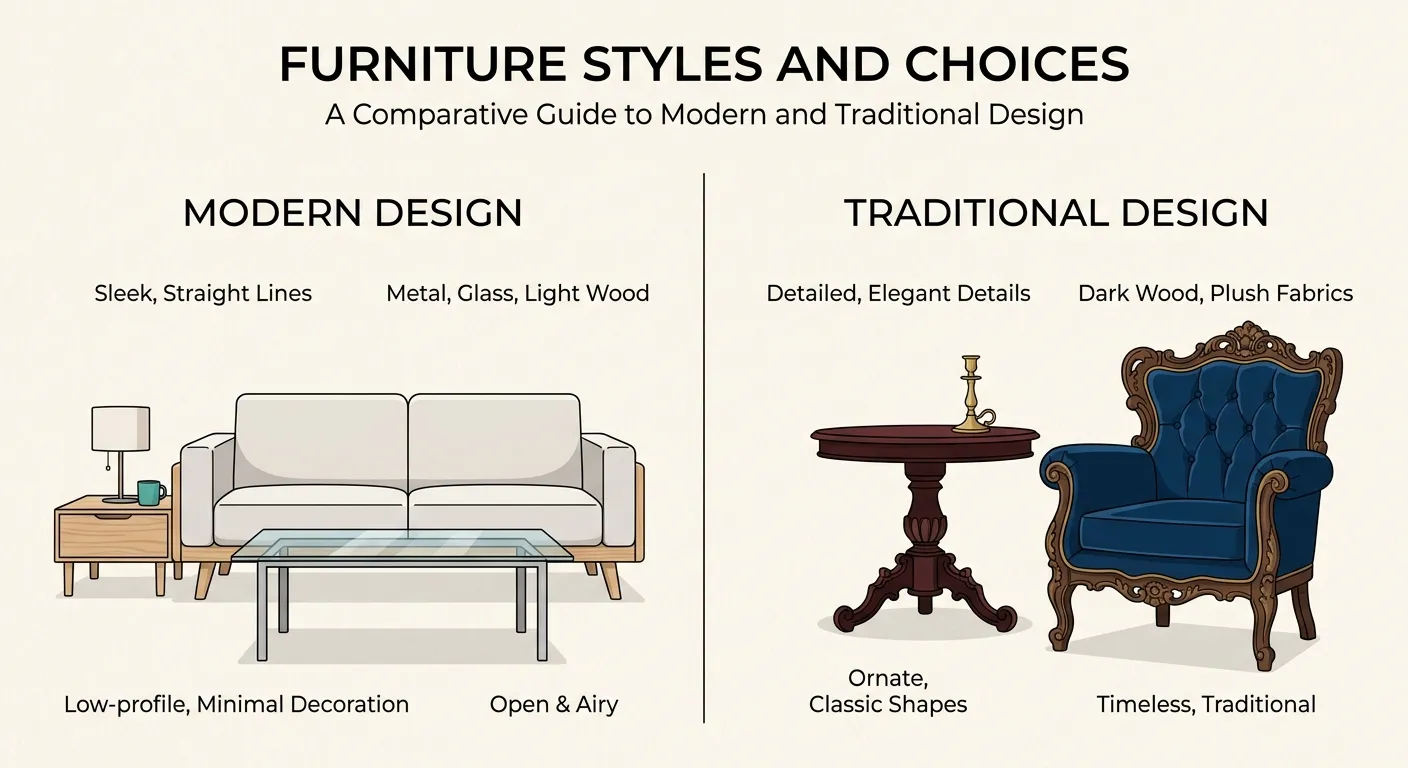
Furniture Styles And Choices
Choosing furniture is a key part of interior design. It sets the mood and style of a room.
Modern and traditional designs use very different furniture styles. Each style has unique features.
Sleek And Simple Modern Pieces
Modern furniture is clean and simple. It focuses on straight lines and smooth surfaces.
Materials like metal, glass, and light wood are common. Modern pieces avoid extra decoration.
- Low-profile sofas and chairs
- Minimalist coffee tables
- Neutral colors with bold accents
- Open and airy designs
Detailed And Elegant Traditional Furniture
Traditional furniture is rich and detailed. It often features carved wood and classic shapes.
Dark wood tones and plush fabrics are popular. These pieces add warmth and a timeless feel.
- Ornate armchairs and sofas
- Wood tables with detailed legs
- Rich fabrics like velvet or brocade
- Decorative trims and patterns
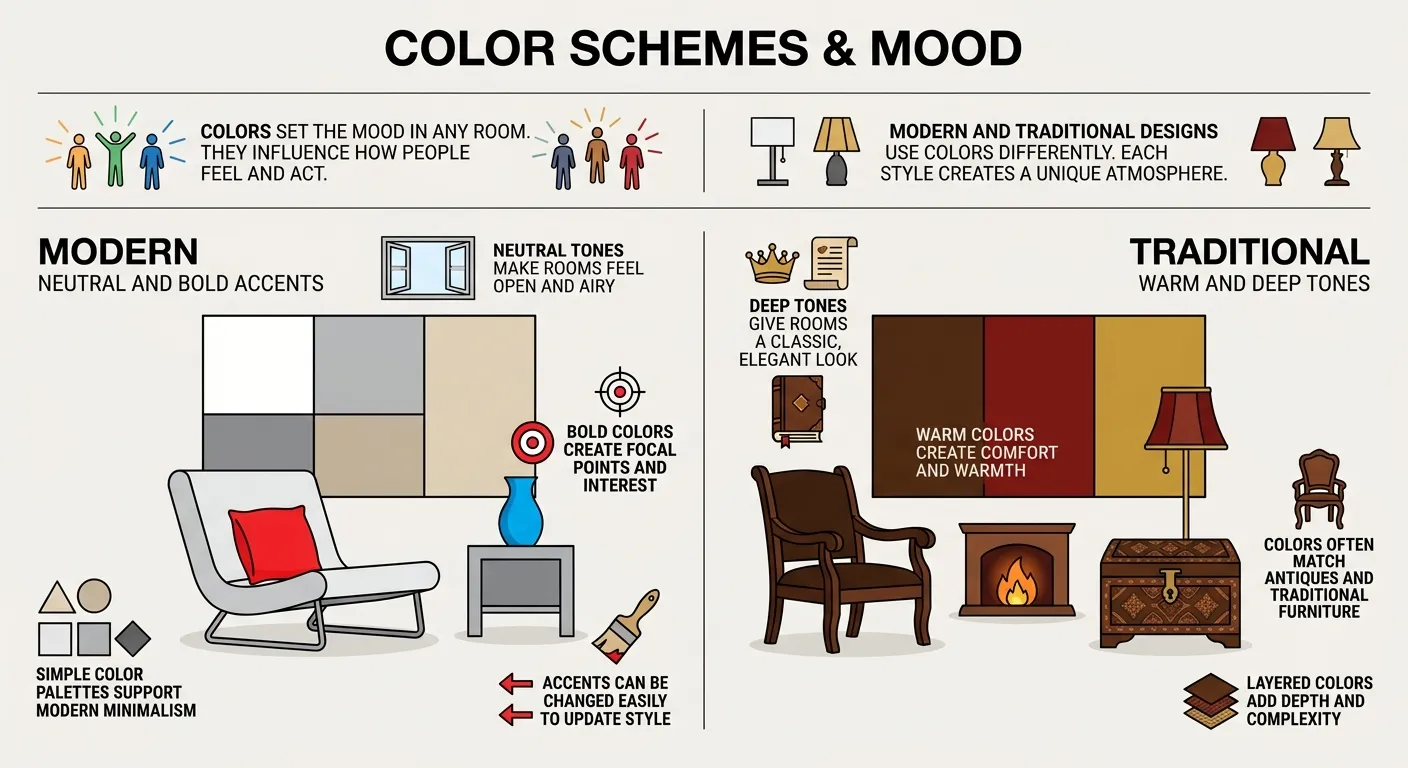
Color Schemes And Mood
Colors set the mood in any room. They influence how people feel and act.
Modern and traditional designs use colors differently. Each style creates a unique atmosphere.
Modern Neutral And Bold Accents
Modern design often uses neutral colors like white, gray, and beige. These colors create a clean, calm space.
Bold accents add energy. Bright blues, reds, or yellows stand out against neutral backgrounds.
- Neutral tones make rooms feel open and airy
- Bold colors create focal points and interest
- Simple color palettes support modern minimalism
- Accents can be changed easily to update style
Traditional Warm And Deep Tones
Traditional design uses warm colors like browns, reds, and golds. These colors make spaces feel cozy and inviting.
Deep tones add richness and a sense of history. They often reflect natural materials like wood and leather.
- Warm colors create comfort and warmth
- Deep tones give rooms a classic, elegant look
- Colors often match antiques and traditional furniture
- Layered colors add depth and complexity
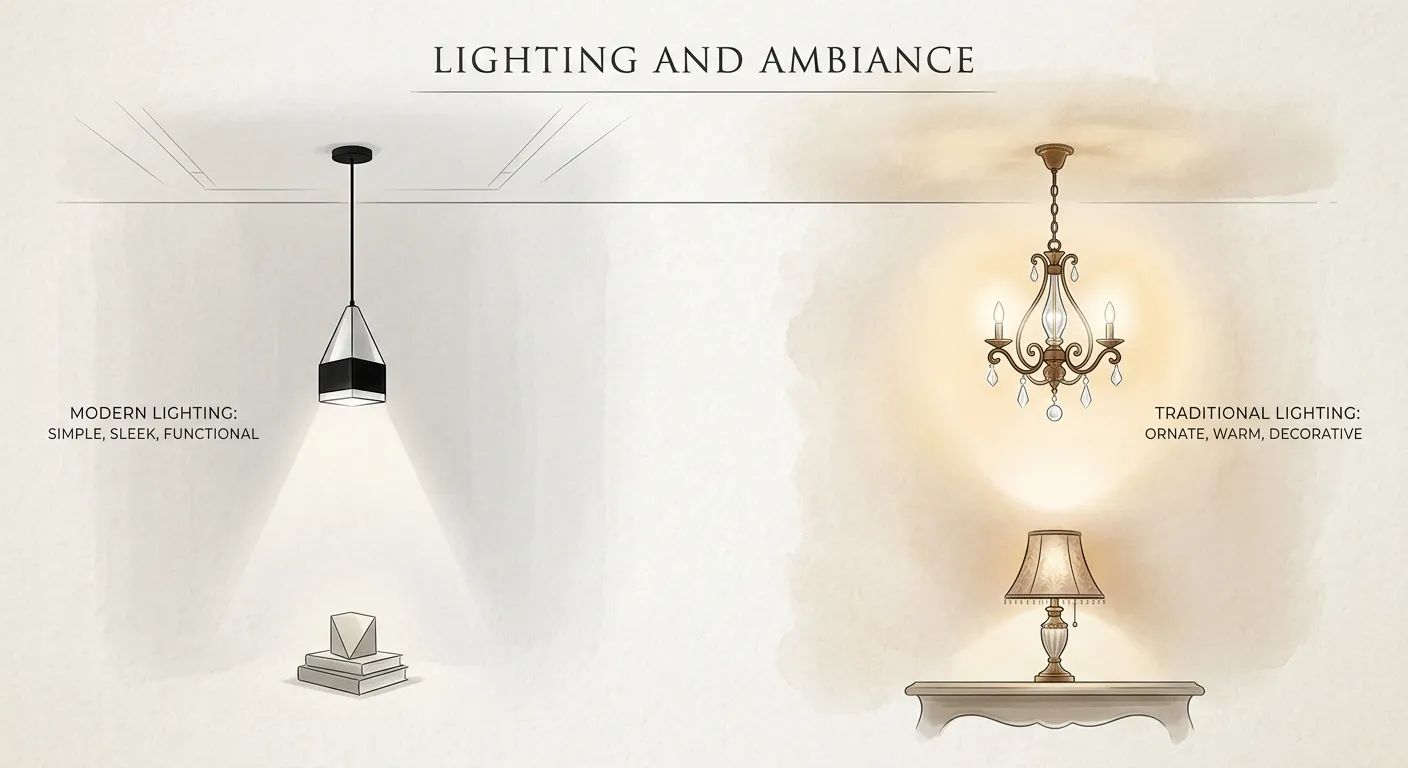
Lighting And Ambiance
Lighting plays a big role in setting the mood of a room. It helps create a space that feels warm or cool, bright or cozy.
Modern and traditional interior designs use lighting in different ways to shape the ambiance. Each style has its own unique touch.
Modern Lighting Fixtures
Modern lighting fixtures are simple and sleek. They often use metal, glass, and clean lines to look stylish and neat.
These lights usually focus on function and minimalism. LED lights are common because they save energy and last long.
- Use of recessed lighting for a clean ceiling look
- Track lighting to highlight art or furniture
- Pendant lights with geometric shapes
- Neutral colors like black, white, or silver
Traditional Chandeliers And Lamps
Traditional lighting often features chandeliers and lamps with ornate designs. They use warm colors and classic shapes.
These lights add a rich and cozy feeling to the room. Materials like brass, bronze, and crystal are common choices.
- Large chandeliers with detailed metalwork
- Table lamps with fabric or patterned shades
- Warm light bulbs for a soft glow
- Decorative wall sconces that match the room style
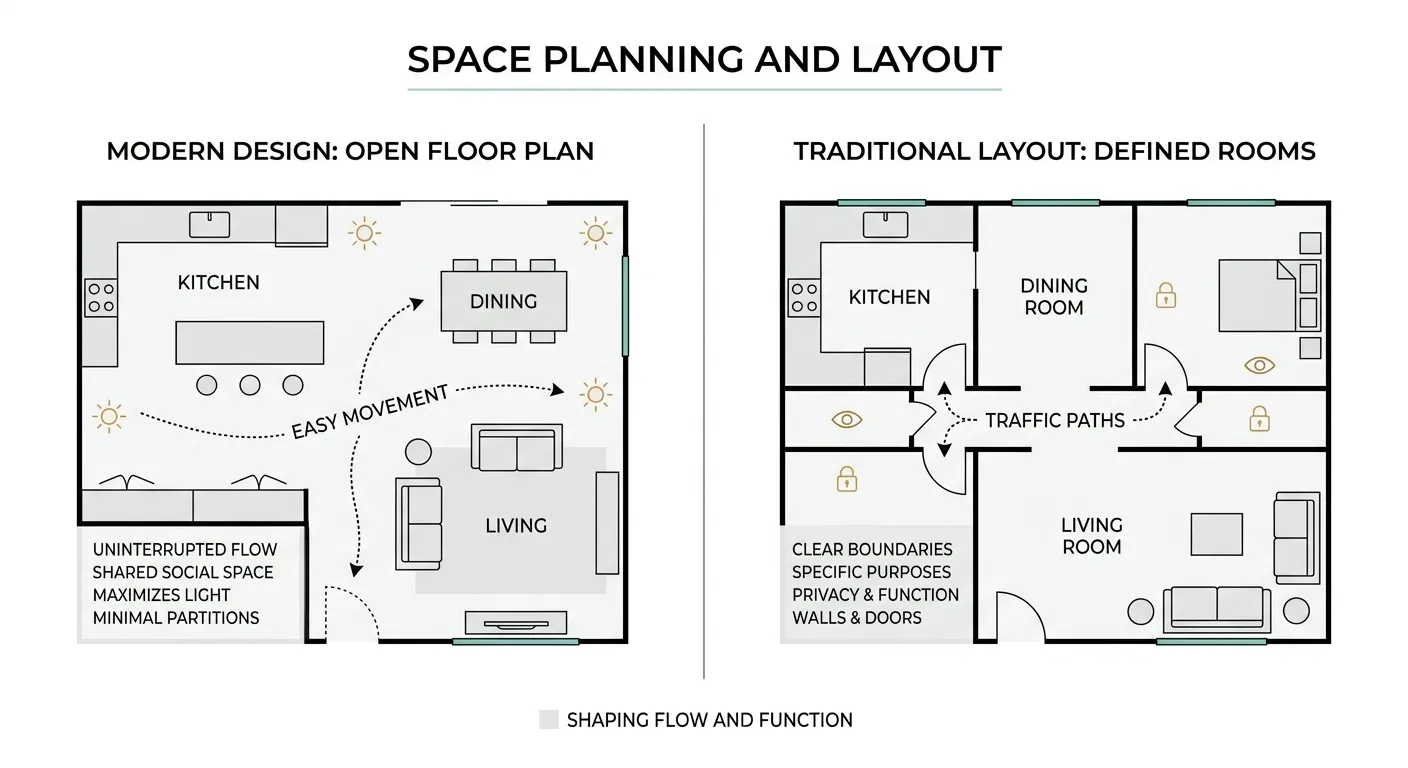
Space Planning And Layout
Space planning and layout are key in interior design. They affect how a room feels and works.
Modern and traditional styles use space differently. Each style shapes the home’s flow and use.
Open Floor Plans In Modern Design
Modern design favors open floor plans. It removes walls to create large, shared spaces.
This layout improves light flow and social interaction. It makes small homes feel bigger.
- Combines kitchen, living, and dining areas
- Encourages easy movement between spaces
- Uses minimal walls and partitions
- Focuses on multifunctional furniture
Defined Rooms In Traditional Layouts
Traditional design uses defined rooms with clear boundaries. Each room has a specific purpose.
Walls and doors separate spaces for privacy and function. This layout supports formal living and dining.
- Separate kitchen, dining, and living rooms
- Rooms often have walls and doors
- Focus on formal and private spaces
- Clear traffic paths between rooms
Decor And Accessories
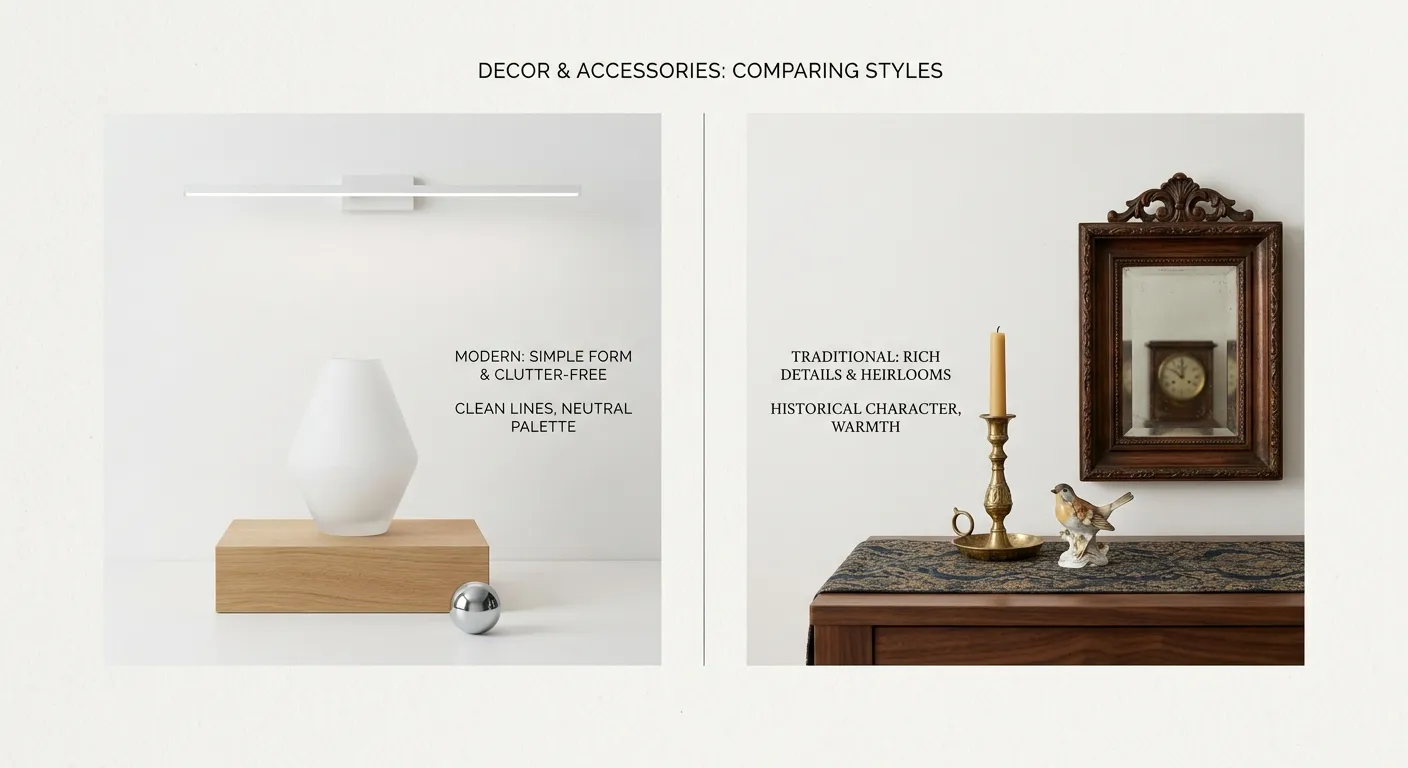
Decor and accessories play a big role in shaping a room’s style. They show the difference between modern and traditional design. Each style uses items that match its overall look.
Modern design focuses on simplicity and clean lines. Traditional design uses rich details and meaningful objects. Both styles use decor to create a unique atmosphere.
Minimalist Modern Decorations
Modern decor often follows a minimalist approach. It uses few accessories to keep spaces open and clear. Decorations have simple shapes and neutral colors.
Common items include sleek vases, abstract art, and metal or glass pieces. These decorations add style without cluttering the room.
- Simple geometric shapes
- Neutral color palettes
- Functional and decorative lighting
- Art with clean lines or abstract designs
- Minimal use of textiles and patterns
Heirlooms And Collectibles In Traditional Design
Traditional design often features heirlooms and collectibles. These items bring history and character to a space. They show personal stories and family traditions.
Decor includes antique furniture, framed portraits, and decorative plates. These accessories add warmth and detail to the room.
- Vintage clocks and lamps
- Porcelain and ceramic figurines
- Handmade quilts and embroidered textiles
- Framed paintings and photographs
- Ornate mirrors and candle holders
Cost And Maintenance
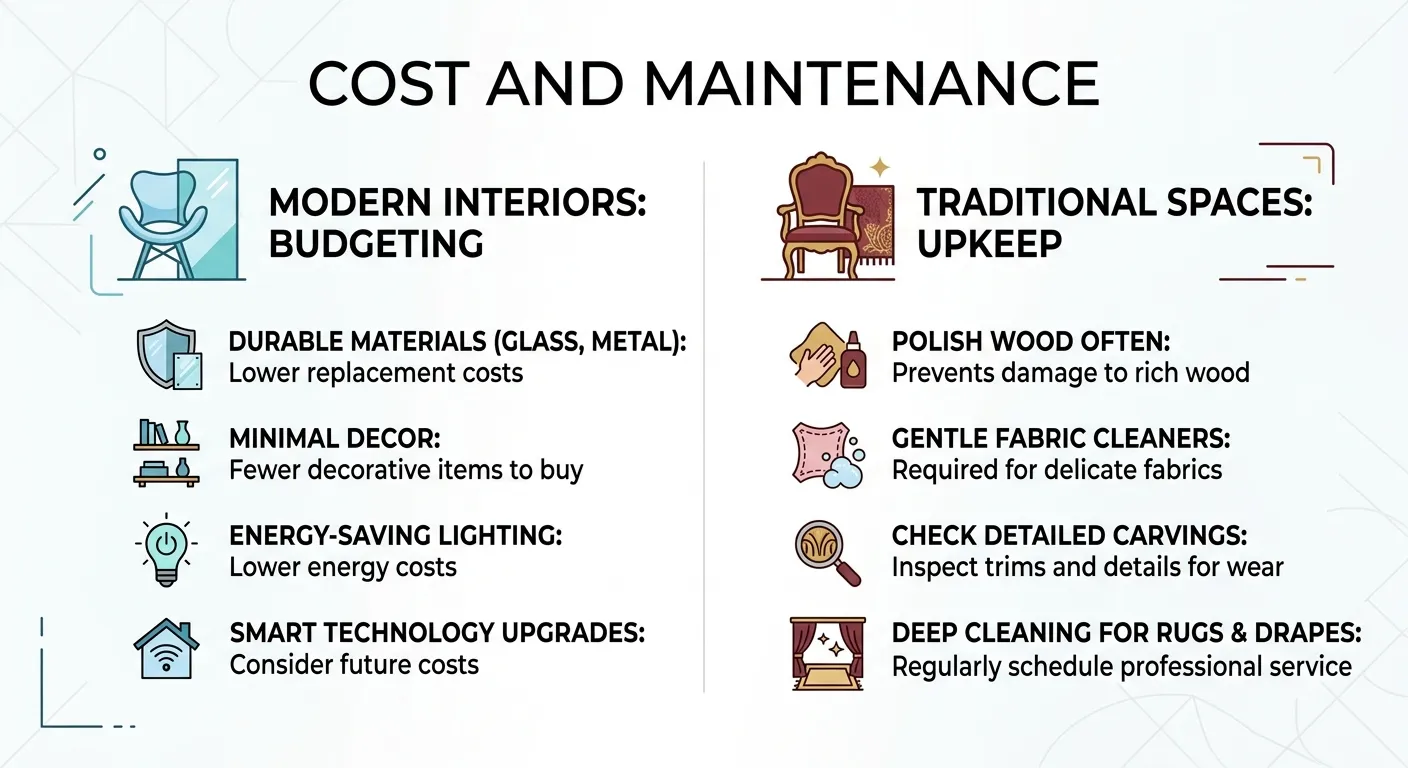
Choosing between modern and traditional interior design can affect your budget and upkeep. Both styles have different costs and maintenance needs.
Understanding these differences helps you plan your spending and care for your space properly.
Budgeting For Modern Interiors
Modern interiors often use sleek materials like glass and metal. These can be pricey but last long with less repair.
Simple furniture and clean lines reduce clutter and can save money on decor items.
- Choose durable materials to lower replacement costs
- Minimal decor means fewer items to buy
- Invest in quality lighting for energy savings
- Plan for smart technology upgrades
Upkeep Of Traditional Spaces
Traditional design uses rich wood and detailed fabrics. These need regular cleaning and care to stay beautiful.
Ornate furniture and decorations can require more repairs and special cleaning products.
- Polish wood furniture often to prevent damage
- Use gentle cleaners for delicate fabrics
- Check for wear on detailed carvings and trims
- Schedule regular deep cleaning for rugs and drapes
Choosing The Right Style For You
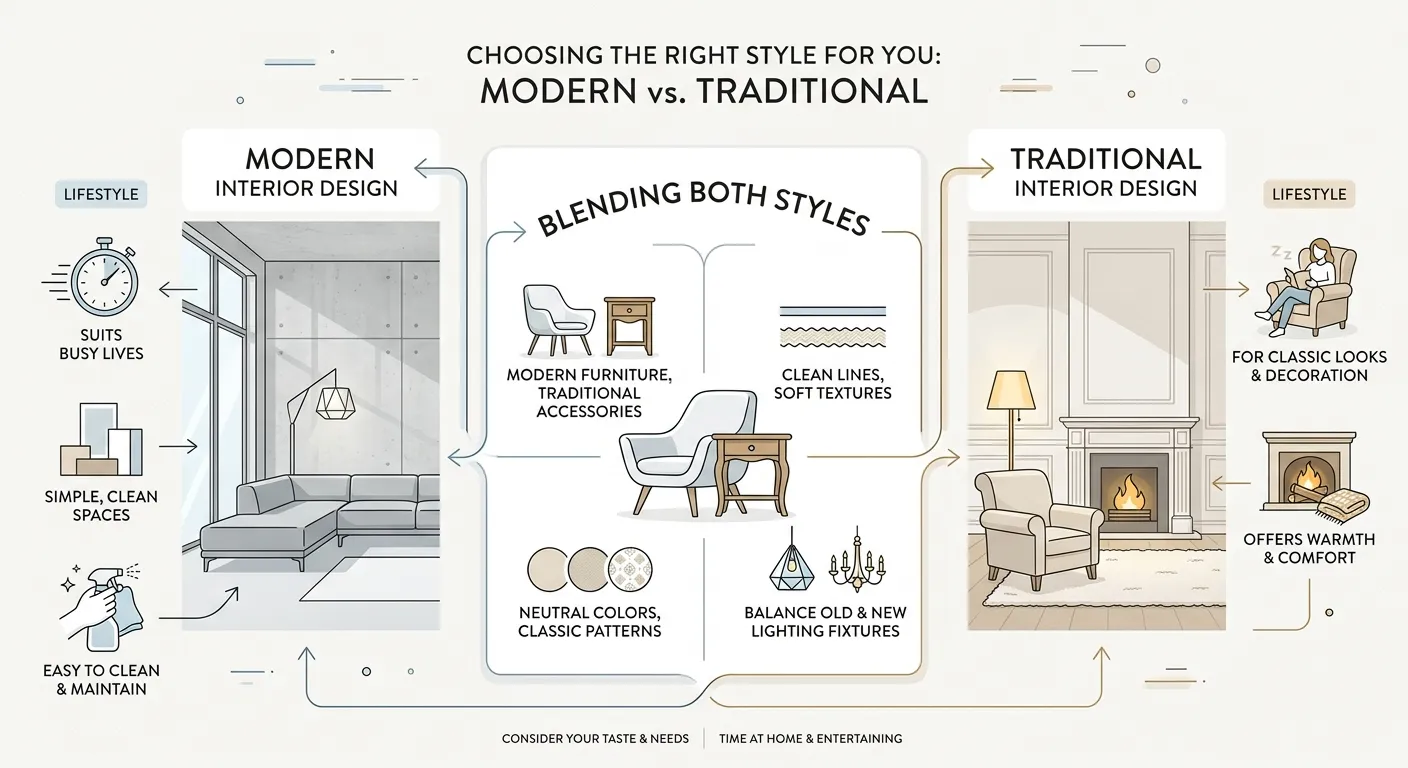
Modern and traditional interior designs offer very different looks. Choosing the right style depends on your taste and needs.
Both styles have strong points. Understanding them helps you create a home you love.
Lifestyle Considerations
Your daily routine affects which style fits best. Modern design suits busy lives with simple, clean spaces.
Traditional design works well if you enjoy classic looks and more decorative details in your home.
- Modern style is easy to clean and maintain
- Traditional style offers warmth and comfort
- Think about how much time you spend at home
- Consider how often you entertain guests
Blending Both Styles
You can mix modern and traditional styles to fit your personality. This creates a unique and balanced space.
Start by choosing one style as the base. Add small touches from the other style to add interest.
- Use modern furniture with traditional accessories
- Mix clean lines with soft textures
- Combine neutral colors with classic patterns
- Balance old and new lighting fixtures
Frequently Asked Questions
What Are The Key Differences Between Modern And Traditional Design?
Modern design uses clean lines and minimalism. Traditional design features rich details and classic styles.
Which Style Suits Small Living Spaces Better?
Modern design fits small spaces well with its simplicity and open layouts.
How Do Color Choices Vary In Modern And Traditional Styles?
Modern styles use neutral or bold colors. Traditional styles prefer warm and soft tones.
What Materials Are Common In Traditional Versus Modern Interiors?
Traditional interiors use wood and fabric. Modern spaces favor metal, glass, and concrete.
Can Modern And Traditional Designs Be Mixed Effectively?
Yes, combining both styles creates a balanced, unique look when done thoughtfully.
Conclusion
Both modern and traditional designs offer unique charms. Modern design embraces simplicity and clean lines. Traditional design celebrates rich history and warmth. Each style brings a distinct atmosphere to your space. Choosing between them depends on personal taste and lifestyle.
Mixing elements from both can create a balanced look. Consider your home’s purpose and your comfort. Explore both styles for inspiration. Find a blend that reflects your personality. The key is creating a space where you feel at home. Your design choice should bring joy and functionality.
So, choose wisely and enjoy your unique space.
Related post

Indoor Plants Vs Artificial Plants in Interiors: Ultimate Showdown
Are you thinking about adding some greenery to your space but can’t decide between indoor plants and artificial ones? You’re not...
Wooden Vs Metal Furniture: Ultimate Guide to Durable Style Choices
Are you thinking about refreshing your space with new furniture but can’t decide between wooden and metal options? Choosing the...

How to Get Custom Interior Design in Dhaka: Expert Tips Revealed
Are you dreaming of a home that truly reflects your style and personality? Getting custom interior design in Dhaka can turn that...

10 Reasons to Hire a Professional Interior Designer in Dhaka: Transform Your Space!
Are you planning to transform your home or office in Dhaka but feel overwhelmed by all the design choices? Hiring a professional...